How to Adjust a uPVC Window to Stop Draughts and Sticking
A sticking, dropped, or draughty uPVC window is usually a sign that the frame has shifted slightly on its hinges over time. Expansion from temperature changes, heavy double-glazed glass, and regular daily use can cause even high-quality uPVC windows to drift out of alignment.
Learning how to adjust a uPVC window yourself is a simple DIY task that restores a draught-proof seal, smooth operation, and home security without calling out a professional glazier. This guide covers the step-by-step process for adjusting uPVC window hinges, clearing stiff friction stays, and tightening compression to keep cold air out.
Why Is Your uPVC Window Sticking or Let in Draughts?
Before picking up a tool, identifying the exact symptom helps locate the right mechanism to adjust:
- The window catches at the bottom or side: The sash (the opening part of the window) has dropped or sagged. The hinges require vertical or lateral realigning.
- Cold air or noise leaks through the edges: The compression between the window sash and the outer frame seal is too loose.
- The window swings open too easily or slips shut in the wind: The friction stays need tightening.
- The handle is stiff to turn: The locking cam pins or keep plates are misaligned.
Tools Required
- 4mm Allen key (hex key) — standard size for most uPVC window fittings in the UK
- Phillips screwdriver (PH2)
- Flathead screwdriver
- Silicone-based spray lubricant or light machine oil (do not use WD-40, which strips protective coatings)
- A pencil (for marking reference points)
For uPVC Window Compression Adjustment
- Locate the locking cams: Find the small metal cams/rollers along the edge of the window sash.
- Check the indicator point: Most locking cams have a small dot or mark showing their current position.
- Increase compression: Turn the indicator point towards the rubber weather seal to create a tighter seal and help reduce draughts.
- Reduce compression: Turn the indicator point away from the rubber seal if the window handle feels too stiff.
- Use a 4mm Allen key: Where the fitting has an Allen-key adjustment, make small adjustments and test the window after each turn.
For uPVC Window Frame Adjustment
You can add:
- Friction stay hinge: Adjust the friction screw to control how easily the window opens and stays in position.
- Locking cam / mushroom: Adjust the cam to change the compression against the rubber weather seal.
- Hinge adjustment screw: Use the hinge adjustment points to correct a dropped or misaligned window sash.
- Make small adjustments: Turn the adjustment screw gradually and check the window after each adjustment.
Step 1: Adjusting uPVC Window Hinges for Diagonal Sagging
When a side-hung or casement uPVC window drops, the top corner furthest from the hinge pulls downward, causing the bottom rail of the window to scrape against the outer frame.
1.Inspect Hinge Alignment:Locate the upper and lower hinge fixings.
Open the window to a 90-degree angle. Look at the hinge arms mounted on the top and bottom (or sides) of the window frame. Locate the main adjustment screws set into the metal hinge casing.
2.Mark the Initial Position:Crucial for tracing your adjustments.
Use a pencil to draw a thin line around the current position of the hinge plate against the frame. This gives a visual baseline if you need to reset your adjustments.
3.Adjust the Lateral Screw:Use a 4mm Allen key to shift the sash.
Insert a 4mm Allen key into the lateral adjustment screw located on the hinge arm:
- Clockwise turn: Moves the window sash closer to the hinge side (raising the opposite diagonal corner).
- Anticlockwise turn: Moves the window sash away from the hinge side.
Turn in half-turn increments, testing the window closure after each adjustment until it clears the outer frame smoothly.
Step 2: How to Adjust uPVC Windows to Stop Draughts (Compression Settings)
If cold air is whistling through your double glazing, the rubber weather seal is likely not compressing tightly against the outer frame. You can fix this by adjusting the locking cams (also called mushroom rollers) located along the edge of the window sash.
- Loose / Summer Setting: The indicator point faces away from the rubber weather seal, reducing compression.
- Tight / Winter Setting: The indicator point faces toward the rubber weather seal, increasing compression.
- For draughts: Turn the locking cam so the indicator point moves toward the rubber seal.
- For easier handle operation: Reduce the compression by turning the indicator point away from the rubber seal.
1. Locate the Locking Cams: Open the window and look at the metal locking strip along the side of the sash. You will see small, eccentric metal rollers (cams) that move when you turn the handle.
2. Identify the Compression Mark: Most cams have a small dot, notch, or Allen key slot stamped into them. This mark shows the current tension direction.
3. Adjust with an Allen Key or Pliers:
- Insert a 4mm Allen key (or turn with flat-nosed pliers on oval cams).
- Turn the dot toward the rubber seal: Increases compression, pulling the window sash tighter against the frame to seal out draughts (ideal for winter).
- Turn the dot away from the rubber seal: Decreases compression, making the window handle easier to turn if it feels overly stiff.
Step 3: How to Adjust a Top-Hung uPVC Window
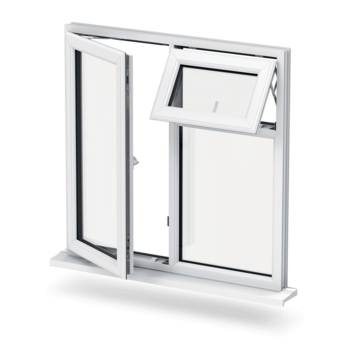
Top-hung windows (commonly used in bathrooms and smaller bedrooms) open outwards from the bottom. Over time, the weight of the glass pulling down on the top hinges can cause the bottom edge to catch or seal unevenly.
1.Check the Top Friction Stays:Locate the sliding track on the sides of the frame.
Open the top-hung window fully. Inspect the side tracks mounted vertically along both sides of the window aperture.
2.Adjust the Friction Track Screw:Balance resistance on both sides evenly.
Locate the small brass or steel screw inside the plastic slider block on the friction stay track:
- Turn clockwise to tighten the resistance so the top-hung window stays open securely in the wind.
- Turn anticlockwise to loosen if the window requires excessive force to push open or pull closed.
- Important: Adjust both left and right tracks by the exact same amount to avoid twisting the top rail.
Troubleshooting Common uPVC Window Adjustment Issues
| Symptom |
Cause |
DIY Solution |
-————————————————————— |
-——————————————————- |
-————————————————————————————————————- |
| Window catches at the bottom outer corner |
Sash has sagged/dropped diagonal level |
Turn top hinge adjustment screw clockwise to pull sash back toward the hinge |
| Drafts coming through side seals |
Insufficient compression on locking cams |
Rotate locking cam notch towards the rubber weather strip |
| Window handle won’t turn fully down |
Locking cams missing the keep plates |
Adjust vertical height or reposition keep plates using fixing screws |
| Window slams shut in breeze |
Loose friction stay sliders |
Tighten friction stay adjustment screw inside side tracks |
| Frame makes grinding noise |
Dry mechanism or grit in tracks |
Clean tracks with soft brush; spray metal hinges with silicone lubricant |
When Adjustment Isn’t Enough: Repairs vs Replacement
While learning how to adjust uPVC window fixes most operational issues, adjustment cannot resolve structural wear or material degradation:
- Blown Double-Glazed Units: If condensation forms inside between the glass panes, the double-glazing seal has failed. The glass unit must be replaced.
- Warped or Twisted Frames: Older uPVC frames lacking steel reinforcement can bow permanently under extreme heat exposure, preventing a tight weather seal despite hinge adjustments.
- Worn Out Friction Stays: If metal hinge arms are bent, rusted, or missing rivets, replacing the entire friction stay pair is safer than adjusting worn parts.
If your windows are over 20–25 years old, adjusting hinges offers only temporary relief. Modern A-rated energy-efficient uPVC windows feature multi-point locking systems, advanced Liniar profiles, and high-performance draught insulation that lowers heating bills significantly compared to legacy double glazing.
Need replacement windows or upgrade options?
If adjusting your uPVC window hasn’t solved draughts or frame distortion, explore our range of A-rated, high-performance uPVC windows built with advanced Liniar profiles. Configure your exact dimensions online at Trade Windows Online or call our expert technical team on 020 8504 6766 for trade discounts and fast 7-day turnaround delivery across the UK
Want to know more about our Standard PVCu Windows
Take a closer look at our options. Affordable windows in a class of their own
Standard PVCu Windows