French Door Hinges Explained: Adjustment, Problems & Replacement
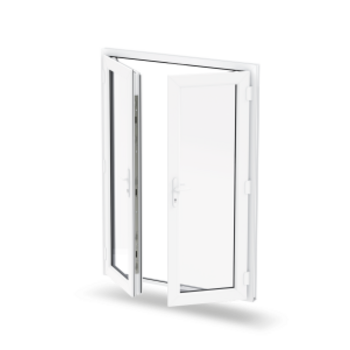
French doors can be an excellent way to connect a home with a garden, patio or balcony, but their performance depends on more than the door panels and glass. French door hinges play an important role in keeping the doors correctly aligned, allowing them to open and close smoothly and helping the locking system operate as intended.
Over time, you may notice that a French door starts rubbing against the frame, becomes difficult to close, catches at the bottom or leaves a small gap around the seals. In many cases, the hinges or door alignment are worth checking first.
However, not every problem can be solved by turning an adjustment screw. The hinge design, condition of the door frame, seals, locking mechanism and installation can all affect how the door operates.
This guide explains the main types of French door hinges, how adjustment works, common problems to look for and when replacing or upgrading the complete door may make more sense.
What Are French Door Hinges?
French door hinges are the components that connect each hinged door leaf to its frame and allow the door to swing open and closed.
Unlike sliding patio doors, French doors rely on hinges to support the weight of the door leaf while maintaining its position within the frame.
Modern uPVC French doors commonly use adjustable hinges. These allow limited movement of the door so that installers or experienced users can correct minor alignment problems.
The exact adjustment method depends on the hinge manufacturer and design, so it is important not to assume that every hinge uses the same screw positions or adjustment range.
What Types of Hinges Are Used on French Doors?
There are several hinge designs used across French and uPVC door systems.
Adjustable Flag Hinges
Flag hinges are commonly associated with modern uPVC doors. Their main advantage is adjustability. Depending on the hinge design, adjustments may allow the door to move vertically, horizontally or towards and away from the frame.
Butt Hinges
Traditional butt hinges consist of two leaves joined around a central pin. They are common on many types of doors and can provide a straightforward, robust hinge arrangement.
However, they do not necessarily offer the same adjustment capabilities as modern adjustable uPVC hinges.
Adjustable uPVC French Door Hinges
When people search for uPVC French door hinges, they are often looking for adjustable replacement hinges or information about correcting an alignment problem.
Before buying a replacement hinge, check the existing hinge carefully. The dimensions, fixing positions, hinge profile and adjustment mechanism need to be compatible with the door system.
Why Do French Door Hinges Need Adjusting?
Doors can gradually move out of alignment through normal use. Changes in the building, repeated opening and closing, loose fixings or wear to components can also contribute.
Common symptoms include:
- The door catches against the frame.
- The bottom of the door rubs against the threshold.
- The door is difficult to close.
- The lock becomes harder to operate.
- There is an uneven gap around the door.
- Draughts appear around the edges.
- The two French door leaves no longer meet correctly in the centre.
A small alignment issue does not necessarily mean that the entire door needs replacing.
However, it is important to identify the underlying problem before making adjustments.
How Does Adjusting French Door Hinges Work?
Adjusting French door hinges generally involves making small changes to the hinge’s adjustment points so the door sits correctly within its frame.
The exact process varies between hinge systems, but adjustments can typically address three types of movement:
1. Height Adjustment
If the door has dropped and is rubbing against the threshold, a vertical adjustment may help reposition the door.
This should normally be done gradually rather than making a large adjustment to one hinge.
2. Side-to-Side Adjustment
If the door is too close to one side of the frame, the hinge may provide lateral adjustment.
This can help correct an uneven gap between the door leaf and frame.
3. Compression Adjustment
Some uPVC hinge systems allow the door to move slightly towards or away from the frame.
This can affect how firmly the seals sit against the frame.
The adjustment mechanism is not universal, so always check the hinge design or manufacturer’s instructions before turning screws.
How to Adjust uPVC French Doors
If you are adjusting uPVC French doors, start by identifying the actual problem rather than immediately turning every adjustment screw.
Step 1: Inspect the Door
Open and close the door slowly.
Look for:
- Rubbing marks
- Uneven gaps
- Damaged seals
- Loose screws
- Damaged hinge covers
- Cracks or visible damage
- Problems around the locking points
Step 2: Check the Hinges
Inspect each hinge for obvious damage or looseness.
Do not assume that the hinge is responsible simply because the door is difficult to close. A damaged frame, failed seal or locking mechanism can produce similar symptoms.
Step 3: Make Small Adjustments
If your hinge is designed for adjustment, make a small change and test the door.
Avoid making large adjustments immediately. It is easier to assess the effect of one small change at a time.
Step 4: Check Both Door Leaves
French doors normally consist of two leaves, so alignment should be considered across the complete set.
If one leaf is adjusted significantly without checking the other, the central meeting point may become worse rather than better.
Step 5: Test the Locking System
Once the door is aligned, check that it closes and locks normally.
Never force the handle or locking mechanism if it does not operate correctly.
Common French Door Hinge Problems
Understanding the symptom can help determine whether adjustment is appropriate.
| Problem |
Possible Cause |
What to Check |
-——————————- |
-————————————————— |
-—————————————- |
| Door catches at bottom |
Door has dropped or become misaligned |
Vertical hinge adjustment |
| Uneven gap |
Door has shifted sideways |
Lateral adjustment |
| Draught around edge |
Poor alignment or damaged seal |
Hinge position and seals |
| Door difficult to lock |
Alignment or locking issue |
Meeting points and lock |
| Hinge feels loose |
Loose or damaged fixing |
Hinge fixings |
| Adjustment does not help |
Structural/component problem |
Frame, hinges and installation |
When Should French Door Hinges Be Replaced?
Adjustment is not always the answer.
You may need to consider replacing a hinge when:
- The hinge is visibly damaged.
- The adjustment mechanism no longer works.
- The hinge has excessive movement.
- Fixings cannot remain secure.
- The door continues to drop after adjustment.
- Corrosion or physical damage is affecting the hinge.
- The door remains misaligned despite correct adjustment.
Replacement should be compatible with the existing door system. Choosing a hinge based only on appearance can result in an incorrect fit.
Can You Replace French Door Hinges Yourself?
This depends on the door, hinge system and your level of experience.
Simple adjustment of an accessible adjustable hinge may be straightforward when the manufacturer provides suitable instructions.
Replacing a hinge is different. A French door leaf can be heavy, and removing a hinge can affect the door’s alignment and stability. Incorrect installation can also interfere with seals and locking points.
If you are unsure about the hinge type, adjustment method or condition of the door, getting help from a suitably qualified door professional is the safer approach.
Common Mistakes When Adjusting French Door Hinges
A few mistakes can make an alignment problem worse.
Adjusting Only One Hinge
The hinges work together to support and position the door. Making a large adjustment to just one hinge can create additional alignment problems.
Turning Screws Without Identifying Their Function
Not every screw on a hinge is an adjustment screw. Some are used for fixing the hinge.
Making Large Adjustments
Small, controlled adjustments make it easier to understand what has changed.
Ignoring the Seals
A damaged or compressed seal can cause draughts even when the door itself is correctly aligned.
Assuming Every uPVC Hinge Is Identical
Different manufacturers and hinge systems can use different adjustment mechanisms.
Continuing to Adjust a Damaged Door
If the frame, hinge or door leaf is damaged, repeated adjustment may not solve the underlying problem.
When Is It Better to Replace the French Door?
If your existing door has multiple problems, replacement may be more practical than repeatedly repairing individual components.
For example, if the hinges are worn, the frame is damaged, the seals have deteriorated and the locking system is also showing problems, a replacement door set could provide a more comprehensive solution.
Trade Windows Online offers a dedicated range of French doors with different configurations and customisation options.
When comparing a replacement, consider:
- Opening dimensions
- Door configuration
- Frame requirements
- Glazing
- Colour and finish
- Locking system
- Hinge configuration
- Installation requirements
- Overall budget
What Should You Check Before Buying French Door Hinges?
If you are looking for replacement French door hinges, collect as much information about your existing system as possible.
- Check the hinge manufacturer, if identifiable.
- Check the hinge dimensions.
- Check fixing-hole positions.
- Check the door profile.
- Confirm whether the hinge is adjustable.
- Check the direction of adjustment.
- Check the weight and size of the door.
- Confirm whether the hinge is intended for internal or external use.
A photograph of the existing hinge can also be useful when asking a supplier or installer for assistance.
Why Does Correct Door Alignment Matter?
Correct alignment is about more than making the door look neat.
A properly aligned French door should operate smoothly, close correctly and allow the locking system and seals to perform as intended.
If the door is difficult to operate, do not repeatedly force the handle or lock. Investigate the alignment and hardware first.
For persistent problems, professional inspection can help distinguish between a simple hinge adjustment and a more significant issue with the door or frame.
French Door Hinges: Adjustment or Replacement?
French door hinges have an important job: they support the door and help maintain its correct position within the frame.
When a French door begins rubbing, dragging or becoming difficult to close, checking its alignment and hinge condition is a sensible first step.
Adjustable uPVC French door hinges can often accommodate minor alignment changes, but adjustment should be gradual and appropriate to the specific hinge system.
If the hinge is damaged or adjustment does not solve the problem, replacement or professional assessment may be the better option.
Trade Windows Online offers French door options in different configurations. Compare the available specifications with your opening, existing door system and requirements before choosing a replacement.
Frequently Asked Questions
How Do I Know If My French Door Hinges Need Adjusting?
If the door is rubbing, dragging, difficult to close or has uneven gaps, the hinges and overall alignment are worth checking.
Can uPVC French Door Hinges Be Adjusted?
Yes, many modern uPVC French door systems use adjustable hinges, although the available adjustments vary between hinge designs.
How Do I Adjust French Door Hinges?
The method depends on the hinge system. Adjustable hinges may provide vertical, lateral or compression adjustment, but you should follow the manufacturer’s instructions rather than assuming every hinge works the same way.
Why Is My French Door Catching at the Bottom?
A door that catches at the bottom may have dropped or become misaligned, although other issues such as a damaged threshold or frame can also contribute.
Can Adjusting French Door Hinges Fix a Draught?
It can help when the draught is caused by poor door alignment, but damaged or deteriorated seals may also need attention.
Should I Replace or Adjust My French Door Hinges?
If the hinges are intact and the door only has a minor alignment problem, adjustment may be appropriate. Damaged, loose or worn hinges may require replacement.
Can I Replace uPVC French Door Hinges Myself?
Some adjustments can be relatively simple, but hinge replacement involves supporting and correctly aligning the door. If you are unsure, professional assistance is recommended.
When Should I Replace the Whole French Door?
Consider replacement when the door has several problems, including damaged hinges, deteriorated seals, frame problems or persistent locking and alignment issues that cannot be resolved economically.
Want to know more about our French Doors
Take a closer look at our options. Exclusive systems designed in the UK
French Doors